

 The two men sat uncomfortably on the hard stone bench outside of Commissioner Sakai’s office in the Kawachi District of Edo. The larger of the two was a hulking man, who wore a grimy kimono peaking through bits of lamellar armor he had been able to acquire in what had so far been a brief and not very successful career as a Samurai. The silk binding of his armor was stained with the recent spillage of blood. He wore a kerchief of cloth around his disheveled head, obviously covering up what had been a head wound. The neat furtive gentleman sitting next to him wore the expensive, modest, well-traveled cloth of a successful merchant. He did not wish to sit too close to the Samurai – he was fearful of where this dispute would take them. Besides, the warrior’s cloth was poor and he smelled bad.
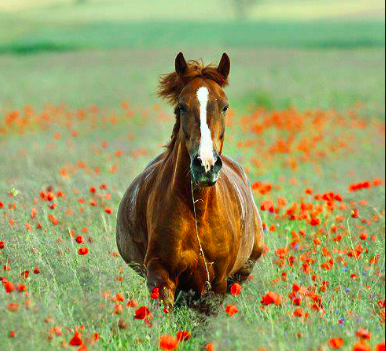
There was a shout of “Enter” as the door opened with a loud creek to the Commissioner’s office. The two men entered the well lit, but sparse room, the merchant ceding way to the burly Samurai for the door. The man seated at the table commanded them with thinly veiled annoyance to be seated. At issue between the two men on this particular day was the rightful ownership of a chestnut mare with a white blaze and four white socks.
Commissioner Sakai turned to the Samurai first. With narrowed eyes he asked sourly “Sir, it appears that you have traveled from afar. Will you please tell me what this is all about? It has been a long day and I wish to resolve this dispute quickly.” He made sure to preface his address to the warrior with the appropriate honorific but was scandalized by the Samurai’s current state of disarray. The merchant shifted uncomfortably next to the warrior eying him haughtily.
The Samurai began to tell his story: “I purchased my horse along The Great Trunk Road[1] from a horse trader seven days ago. I was coming from Kyoto. That mare is very special to me. Her face bears the mark of a warrior—white fletching between her eyes extending to an arrow on her nose. I offered my own good steed, as well as some silver to buy her—all because I thought she would bring me luck.
“Six days ago I was riding through the Benin Forest. I attempted to adjust my armor when my horse spooked and ran out of control. I tried catching the reins but she had her head down and I could not reach them. I received a glancing blow to the head from a low laying branch.”
He paused. Fingering his head bandage he took a deep breath. “But I was finally able to control her. Afterwards, my head was bleeding so much. I could not see, I passed out, I fell off . . . my horse . . . I am so ashamed.” His voice faltered and his lower lip began to quiver.
There was silence. The Samurai was rocking, scarcely imperceptible, in his chair, hands now on his bowed head. Commissioner Sakai was half-expecting him to whimper. “Is there anything else you would like to add?” he asked gently. The Samurai regained his composure and straightened. The merchant was looking a little more at ease.
“When I came to my head hurt a lot and I was covered in blood. I cleaned up a little in a nearby stream and managed to get help from a farmer. I walked all the way back to the horse trader in hopes of finding my lucky mare, or that I might be able to buy back my old horse. That was four days ago. When I got there the horse trader was gone. No one could tell me where he went.”
“It took me four days to walk all the way to Edo from the horse trader’s camp. When I got here this morning you can imagine my surprise when I saw my lucky horse galloping through the streets!”
The merchant eyed him suspiciously.
The Samurai continued, “Thankfully, I was strong enough to grab the bridle and stop her. Then, this gentleman beside me ran up and thanked me profusely for catching his horse! I said ‘What do you mean? This is my horse! I lost her six days ago.’ The man disagreed with me and insisted that I return her. I refused as she is mine.” As proof he showed the Commissioner his bill of sale inked in spidery calligraphy on wrinkled rice paper.
The merchant looked waspish and began to squirm.
The Commissioner leaned back thoughtfully. This was going to be a long afternoon. He reflected briefly on the long line of his ancestral lawmakers. All of them had been far more illustrious than him. People still sing the praises of his great-grandfather who had been a very great and noble arbitrator and who had dealt with matters far more important than the ownership of a wayward mare.
He turned to the Samuarai dourly, “I hear what you have said. Now I would like to hear what Mr. Kimura has to say. He is a highly respected merchant in this town and well-known too.” With the appropriate honorific he turned to the Merchant and asked, “Mr. Kimura, what have you to say about this?”
The respected Mr. Kimura straightened demurely and began, “Honorable Commissioner, I was traveling back from my annual trip to Kyoto. My horse went lame and I happened upon this horse trader along The Great Trunk Road. He offered me this mare for sale at a very reasonable price. At the time I thought her markings unusual and that she could bring me good luck. I paid very little for her. He even took my old lame horse and let me have this young mare in return. I don’t know anything about a Samurai having purchased her. I brought her back here with some difficulty. . .”
The Commissioner leaned forward with interest. “Can you tell me more?” He wondered.
“Honorable Commissioner, this mare is wild. I hoped to hitch her up to my wagon. I use this wagon to transport silk from Kyoto. She kicked the wagon and caused some of my better silks to fall to the ground. And she hurt my driver. I had to use my own good mount—a stallion to draw the wagon instead – not something that I wanted to do. I was stuck having to ride her all the way back to Edo. She’s very skittish, prone to taking off and bucking. She even bit me while I was helping to reload my silks.”
Mr. Kimura rolled up his sleeve gingerly. Above his right elbow just behind the bicep was a glaring bruise with teeth marks spanning the size of an orange. Both the Commissioner and the Samurai winced.
”If the mare is so mean and difficult, why are you so intent on keeping her?” the Commissioner asked reasonably.
“Please sir, I am only a lowly merchant” he responded humbly. “I need this horse for my business. I am hopeful that she can be trained to pull a cart. She is young and I have only had her these past few days. Besides, her arrow mark could bring me good luck and help me toward the path to enlightenment.”
The merchant then produced the bill of sale written on wrinkled rice paper and inked in the same spidery calligraphy presented earlier. The Samurai folded his brawny arms across his chest and eyed the paper with incredulity.
“Understood. What was the name of the horse trader?” inquired the Commissioner.
“His name was Mr. Kato. He is a horse-trader from Osaka” answered the merchant.
The Samurai gasped. “That is the very name of the horse trader who sold me my horse!”
“But I bought my mare five days ago!” the merchant responded defensively.
The Commissioner leaned back in his chair and fingered the bridge of his nose thoughtfully. ‘This is going to take longer than I thought,’ he mused. He mulled the two stories over in his head. The timing coincided. The mare must have returned to her former master, the horse trader, after successfully unseating the Samurai. He imagined the mare arriving covered in blood from the Samurai’s injury. The horse trader might have been frightened that his Samurai client was somehow killed by the untamed mare. He must have cleaned her up and, at the first opportunity, sold her quickly and cheaply out of fear. This could explain his sudden disappearance.
Little is known of how the disagreement was ultimately resolved. What is known is that the mare, being kept in an enclosed space, would not tolerate it. While the Samurai, Merchant and Commissioner were in session haggling over a resolution to this conundrum, the mare kicked, bucked and bit her way at every turn through her enclosure and finally to freedom.
Later, this did not come as a great surprise to the parties concerned when they learned of it. Because, after all, a lucky wild mare with an arrow for a blaze needs wide fields and tall grass for galloping on and can only be her own master.
[1] The Hokkaido
 Being Single at 50